 Pin this
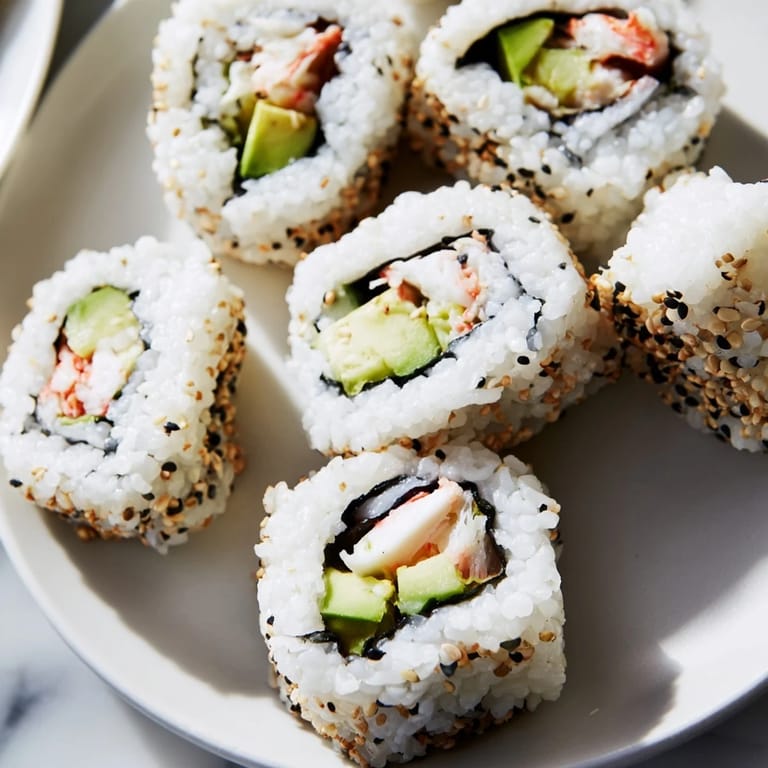
 My first California roll wasn't made by a sushi chef—it was a disaster in my college apartment kitchen, where I'd bought a bamboo mat and some nori with absolutely no idea what I was doing. The rice was too warm, the nori kept falling apart, and I somehow ended up with more crab on the counter than in the roll. But something magical happened when I finally bit into that lumpy, imperfect creation: it tasted exactly like the rolls I'd been craving from the takeout place down the street. That moment taught me that California rolls aren't about perfection—they're about the simple joy of sweet crab, buttery avocado, and that satisfying crunch of cucumber all wrapped up together.
Years later, I made these rolls for my roommate who'd just moved in and couldn't afford to order takeout. Watching her face light up when she realized I'd made them myself, not bought them, felt like I'd accomplished something real in the kitchen. Now whenever I roll these up, I remember that moment—how sharing homemade food breaks down walls in a way buying something never could.
Ingredients
- Sushi Rice (1 ½ cups): The foundation of everything—you need the right kind, not just regular rice, because it has a stickier texture that holds the roll together. Rinsing it thoroughly removes excess starch and prevents gumminess.
- Water (2 cups): The ratio matters here; too much water and your rice becomes mushy, too little and you'll have hard bits. Precision on this one actually pays off.
- Rice Vinegar (2 ½ tbsp): This is what gives sushi rice its signature tang and helps it stay separate rather than clumping. Don't skip it or use regular vinegar—it changes everything.
- Sugar (1 tbsp): A small amount balances the acidity of the vinegar and adds subtle sweetness that rounds out the flavors.
- Salt (¾ tsp): Just enough to make the rice taste like something, not bland filler.
- Crabmeat or Imitation Crab (120 g): Real crab is luxurious but surimi works beautifully and is gentler on the wallet; both have their place depending on your mood and budget.
- Avocado (1 ripe one): The creaminess is essential—use one that yields slightly to pressure but isn't mushy, or you'll end up with brown, falling-apart pieces.
- Cucumber (½, peeled and seeded): The fresh crunch is what keeps this from feeling heavy; removing the seeds prevents sogginess that ruins the texture.
- Mayonnaise (2 tbsp, optional): A thin line adds richness and helps bind the filling together, though it's not traditional—use it or skip it based on your preference.
- Nori (4 sheets): The seaweed wrapper that holds everything together; buy the kind labeled for sushi rolls, and keep it in a sealed container so it stays crispy.
- Toasted Sesame Seeds (2 tbsp): These add nutty flavor and visual appeal; toasting them yourself tastes infinitely better than buying pre-toasted.
Tired of Takeout? 🥡
Get 10 meals you can make faster than delivery arrives. Seriously.
One email. No spam. Unsubscribe anytime.
Instructions
- Rinse and Cook the Rice:
- Run the sushi rice under cold water, stirring gently with your fingers, until the water runs clear—this removes the starchy coating that makes rice gummy. Combine with fresh water in a saucepan, bring to a boil, then drop the heat and cover tightly; let it steam for 15 minutes on low, then keep it covered for another 10 minutes off the heat so the grains finish absorbing the water evenly.
- Season the Rice:
- While the rice is still warm (but not hot), gently fold in the vinegar mixture you've prepared—the warmth helps the rice absorb the seasoning. Use a wooden spoon and a folding motion rather than stirring, which breaks the grains; this is one of those moments where technique actually makes a difference.
- Set Up Your Workspace:
- Lay your bamboo sushi mat on a clean surface and cover it with plastic wrap so the rice doesn't stick to the bamboo. This small step saves you from a frustrating cleanup and makes rolling so much easier.
- Spread the Rice:
- Place a sheet of nori shiny side down on the mat, then wet your hands and spread about ¾ cup of rice evenly over it, leaving a 2 cm border at the top—this border is where you'll seal the roll. Sprinkle a pinch of sesame seeds over the rice layer for flavor and visual appeal.
- Flip and Fill:
- Carefully flip the nori so the rice side is facing down on the mat; this is the inside-out roll technique, and it looks professional even on your first try. Line up your fillings—crab, avocado, cucumber, and a thin streak of mayo if you're using it—along the bottom edge of the nori.
- Roll Tightly:
- Using the bamboo mat as your guide, roll the nori away from you, pressing gently but firmly to create a compact roll; you want it tight enough to hold together but not so tight it crushes the fillings. When you reach the end, seal the edge with just a tiny bit of water on your finger to help it stick.
- Slice and Serve:
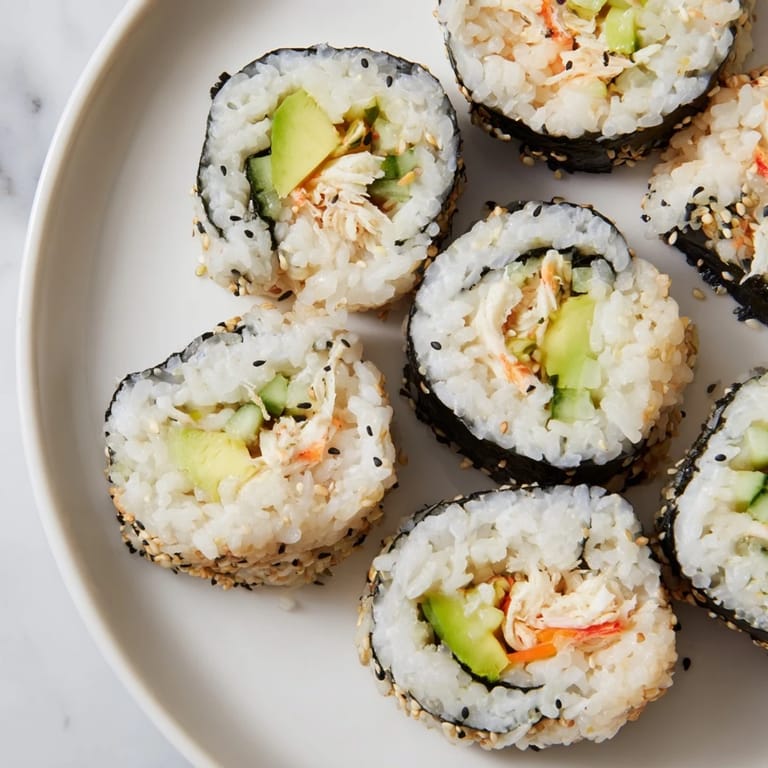
- Using a sharp, damp knife (damp so the rice doesn't stick), slice each roll into 6 pieces with a gentle sawing motion rather than pressing down hard. Wipe your knife between cuts so you get clean pieces instead of ragged edges.
 Pin this
 I learned the hard way that sushi rolls aren't just about technique—they're about understanding how each ingredient contributes to the whole experience. The first time someone told me they could taste the difference between a roll I'd rushed and one I'd taken my time with, I realized that food made with presence tastes better, even when the ingredients are identical.
Why Fresh Ingredients Matter Here
California rolls live or die by ingredient quality because there's nowhere to hide—you're not cooking anything, just assembling. An avocado that's slightly off or crab that's been sitting in the fridge too long will show up immediately in the flavor. I've learned to buy my crab the day I plan to make the rolls and to pick avocados that are perfectly ripe, not hard and not mushy, because that window is narrow and worth paying attention to.
Getting the Rice Temperature Right
This is the detail that separates okay rolls from rolls you'll actually want to eat. Warm rice is forgiving—it seasons well and holds together beautifully—but rice that's been sitting on the counter for hours becomes stiff and difficult to work with. I always use my rice right after it cools just enough to touch; there's usually a sweet spot about 20 minutes after it finishes cooking where everything works perfectly.
The Art of the Inside-Out Roll
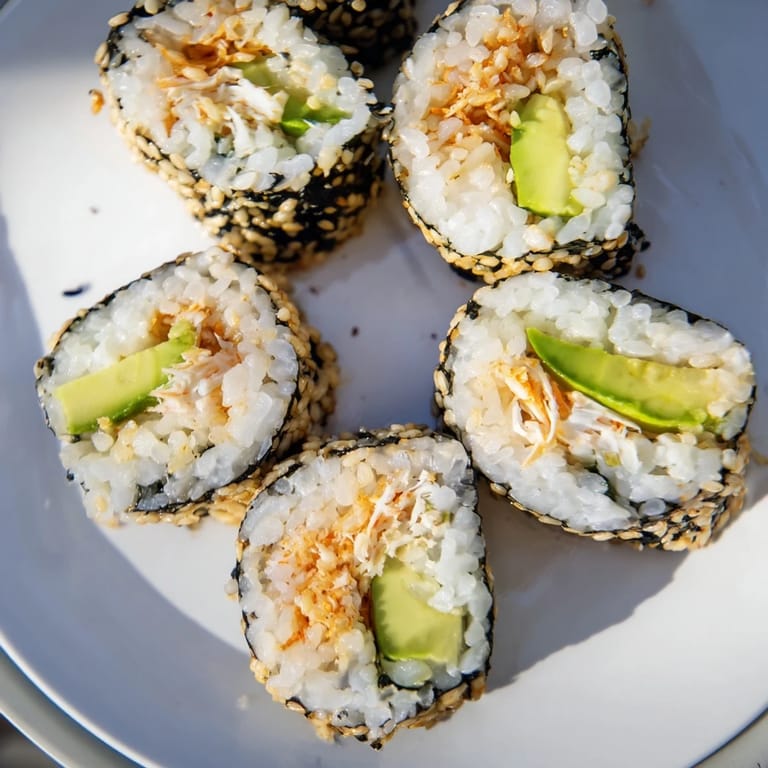
The first time I flipped my nori to hide the rice on the outside, I thought I'd made a terrible mistake—but that technique is what makes these rolls look like they came from a restaurant. It also protects the delicate fillings and creates a beautiful presentation that makes people think you're far more skilled than you actually are. Once you understand the sequence—rice, flip, fill, roll—it becomes almost meditative, and that's when these rolls start tasting better because you're making them with confidence.
- Practice your flip on a few rolls before you care about the outcome; muscle memory beats perfection every time.
- If a roll tears while you're rolling it, just peel it off the mat and try again—there's no penalty for starting over.
- Keep a small bowl of water nearby for wetting your hands and knife; it's the tiny detail that makes rolling feel smooth instead of frustrating.
 Pin this
 Making California rolls has become my go-to move for feeding people I care about without making a big production out of it. There's something honest about serving homemade sushi—it says you wanted to create something together, not just put dinner on the table.
Recipe FAQs
- → What is the best type of crab to use?
Cooked crabmeat or high-quality imitation crab (surimi) works well, offering a delicate texture and flavor that complements the other ingredients.
- → How do I achieve the perfect sushi rice texture?
Rinse the rice thoroughly until water runs clear, cook it gently, then season with a mixture of rice vinegar, sugar, and salt for optimal flavor and stickiness.
- → Can I substitute ingredients for dietary preferences?
Yes, use extra avocado and cucumber or tofu for a vegetarian alternative while maintaining balance in texture and flavor.
- → What tools are essential for rolling?
A bamboo sushi rolling mat and a sharp, damp knife help form tight, even rolls and clean slices for presentation.
- → How to prevent the rice from sticking to hands or tools?
Keep hands wet while handling the rice and use plastic wrap over the bamboo mat to avoid sticking during rolling.
- → What accompaniments enhance the dish?
Soy sauce, pickled ginger, and wasabi provide complementary flavors that enhance the roll’s taste and refresh the palate.