 Pin this
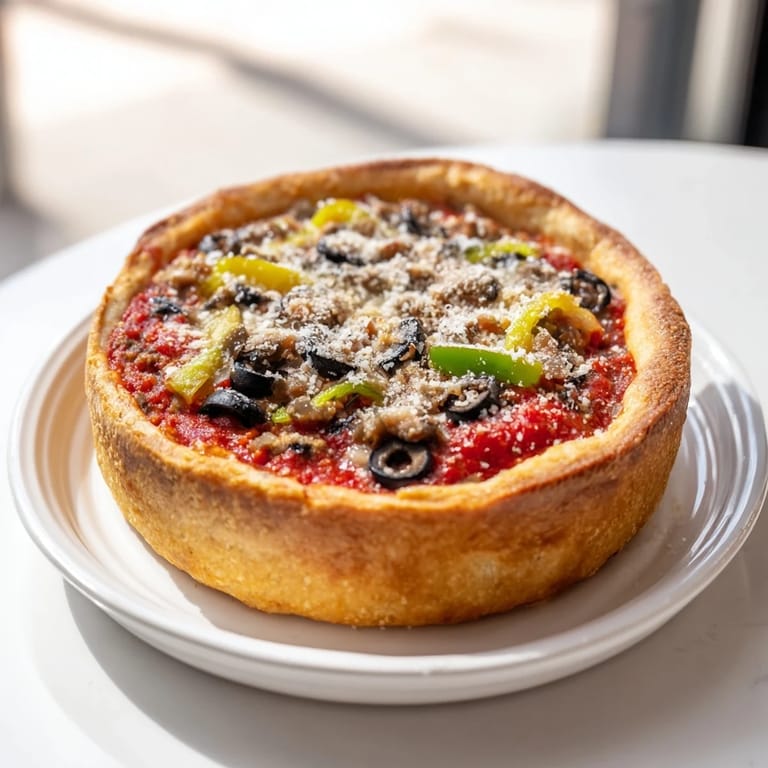
 The first time I made deep-dish pizza at home, I wasn't trying to recreate some fancy restaurant version—I just wanted that specific moment when you bite through a buttery, crispy edge and hit that molten cheese center. It happened on a random Tuesday when I had the kitchen to myself, the kind of afternoon where you can actually focus on layering and timing instead of rushing through dinner prep. Something about that thick, satisfying crust with its golden edges kept me coming back, and now it's become my go-to move when I want to impress people without making a fuss.
I remember my friend Marcus watching me pull this out of the oven for the first time and just getting quiet—that good kind of quiet where you know something smells incredible. He'd driven over thinking we'd order takeout, and instead there was this bubbling, golden-brown masterpiece with cheese threatening to spill over the edges. That moment taught me that homemade doesn't have to mean complicated; it just means showing up with decent ingredients and a little patience.
Ingredients
- All-purpose flour (3 1/4 cups): The backbone of your crust—nothing fancy needed, but make sure it's fresh because old flour can make dough slack and unpredictable.
- Yellow cornmeal (1/2 cup): This is the secret to that slightly gritty, authentic Chicago texture; it prevents the dough from being too tender.
- Active dry yeast (2 1/4 teaspoons): Warm water matters here—too hot kills it, too cold and nothing rises, so aim for around 110°F if you can.
- Olive oil (1/4 cup) and melted butter (2 tablespoons): The oil keeps the dough supple, but the butter is what gives you that golden, crispy exterior everyone remembers.
- Shredded mozzarella (3 cups): Low-moisture mozzarella is your friend; fresh mozzarella will release too much water and make everything watery.
- Grated Parmesan (1/2 cup): This goes on top of the sauce for that sharp, salty bite that cuts through the richness.
- Crushed tomatoes (28 oz can): San Marzano varieties are ideal, but honestly, any good quality crushed tomato works; avoid sauce that's already seasoned.
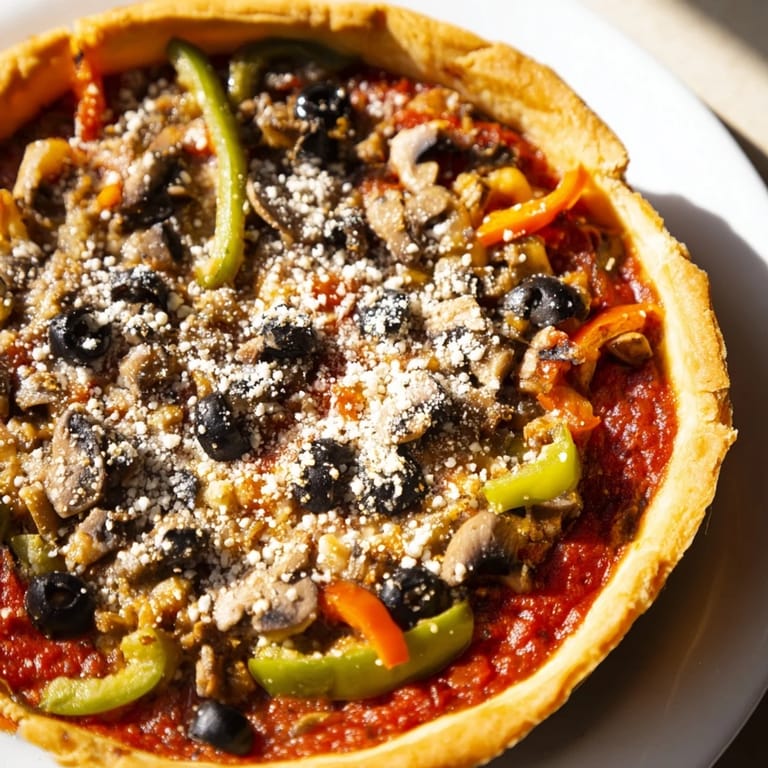
- Mushrooms, bell peppers, olives: Fresh toppings matter—they'll release moisture as they cook, so don't go overboard or your pizza becomes a soggy mess.
Tired of Takeout? 🥡
Get 10 meals you can make faster than delivery arrives. Seriously.
One email. No spam. Unsubscribe anytime.
Instructions
- Wake up the yeast:
- Pour warm water into a bowl, sprinkle yeast over it, and wait about 5 minutes until it looks foamy and smells a bit beery—that's how you know it's alive and ready to work. If it stays flat and silent, your yeast is dead and you need to start over.
- Build the dough:
- Mix in flour, cornmeal, and salt, then add your oil and melted butter—the dough will come together shaggy at first, which is normal. Knead for 5 to 7 minutes by hand until it's smooth and springs back when you poke it; this develops the gluten that gives you structure.
- First rise:
- Plop it in a greased bowl, cover with a damp towel, and let it sit in a warm spot for an hour—doubled in size is your target. If your kitchen is cold, an oven with just the light on works perfectly.
- Make the sauce while waiting:
- Heat olive oil, add minced garlic until fragrant (about a minute), then pour in crushed tomatoes along with oregano, basil, sugar, salt, and pepper. Let it simmer gently for 20 minutes, stirring every few minutes so nothing sticks to the bottom.
- Prep your pan:
- Preheat your oven to 425°F and grease a 12-inch deep-dish pan with olive oil—the oil helps the crust crisp up on the bottom. If you don't have a deep-dish pan, a round cake pan works too.
- Stretch and press:
- Turn the dough out onto your oiled pan and gently press it out, working it up the sides to form that characteristic high edge. Don't stretch too aggressively or it'll tear; let it rest for a minute if it springs back, then keep going.
- Layer it up:
- Spread mozzarella over the dough first, then add your toppings in an even layer, then sauce, then finish with Parmesan. This order matters because you want the cheese to protect the dough from direct heat while the toppings steam gently underneath.
- Bake until golden:
- Pop it in the oven for 35 to 40 minutes—the crust should be deeply golden and the sauce should bubble right up to the edge. If the crust is browning too fast but the middle isn't done, cover the edges loosely with foil.
- Rest before slicing:
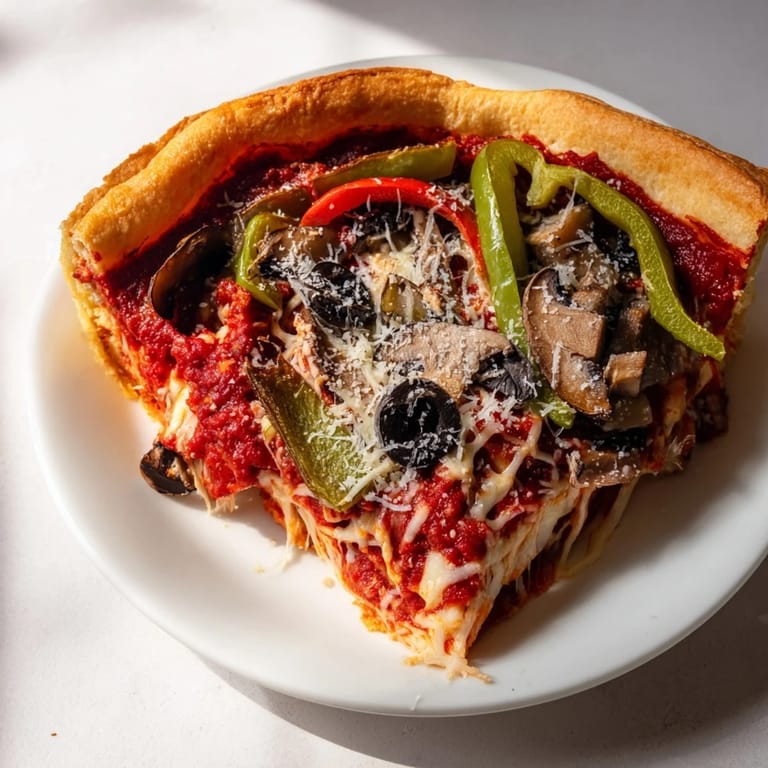
- Pull it out and let it sit for 10 minutes; this lets the cheese set up just enough so it won't all slide off when you cut into it.
 Pin this
 One evening when I'd made this for a small dinner party, someone asked for the recipe and I realized it wasn't actually about the ingredients or the technique—it was about creating something that made people feel like they were in on a secret. Deep-dish pizza isn't fast food, and it's not trying to be; it's the kind of thing you make when you want an evening to stretch out a little and taste like something real.
The Chicago Story
Deep-dish pizza came out of Chicago's need for something hearty, something that could handle the weight of snow and cold. The thick crust, the generous layers—it's all about satisfaction and substance. When I make it, I'm not trying to be authentic or prove anything; I'm just following a tradition that makes sense: pile it high, let it get golden and bubbly, and eat it with people you like. There's no overthinking here, just good instincts and butter.
Customizing Your Toppings
The beauty of deep-dish pizza is that it's forgiving enough to handle whatever you throw at it. I've used leftover roasted vegetables, caramelized onions, even thinly sliced potatoes in a pinch. The key is not to overload it—three or four toppings max—because you want the layers to actually cook through instead of steaming in their own moisture. Think of it like seasoning a dish: you want each element to be heard, not everything screaming at once.
Storage and Reheating
Leftover deep-dish pizza keeps beautifully in the fridge for a few days, and honestly, cold pizza straight from the box is one of life's underrated breakfasts. If you want to reheat, a low oven (around 300°F) will bring it back to life without drying it out—microwave it and you're asking for a rubber disc, which defeats the purpose. You can also freeze uncooked dough after the first rise, wrapped tightly, for up to three months, which is handy if you want to make pizza on a whim.
- Wrap slices individually in foil or parchment to prevent them from sticking together in the fridge.
- Reheat in a 300°F oven for about 10 minutes to restore the crust's texture.
- Frozen dough thaws overnight in the fridge before its final rise and bake.
 Pin this
 This pizza has a way of becoming a ritual, something you reach for when you want to feel capable and generous at the same time. It's yours now—make it, share it, adjust it however feels right.
Recipe FAQs
- → What makes the crust of this deep dish unique?
The crust combines all-purpose flour with yellow cornmeal and melted butter, resulting in a thick, buttery base that holds multiple layers without sogginess.
- → How do you achieve the rich tomato sauce flavor?
The sauce is made by sautéing garlic in olive oil, then simmering crushed tomatoes with oregano, basil, sugar, salt, and pepper for at least 20 minutes to develop depth.
- → Can the toppings be adjusted for a vegetarian option?
Yes, simply omit the meat options like pepperoni or sausage and add more vegetables such as mushrooms, bell peppers, or olives to maintain a flavorful profile.
- → What is the recommended baking temperature and time?
Bake at 425°F (220°C) for 35 to 40 minutes until the crust turns golden brown and the sauce bubbles, ensuring thorough cooking and texture balance.
- → How long should the dough rest before baking?
After kneading, let the dough rise covered for about 1 hour until it doubles in size, allowing for a light, airy crust.