 Pin this
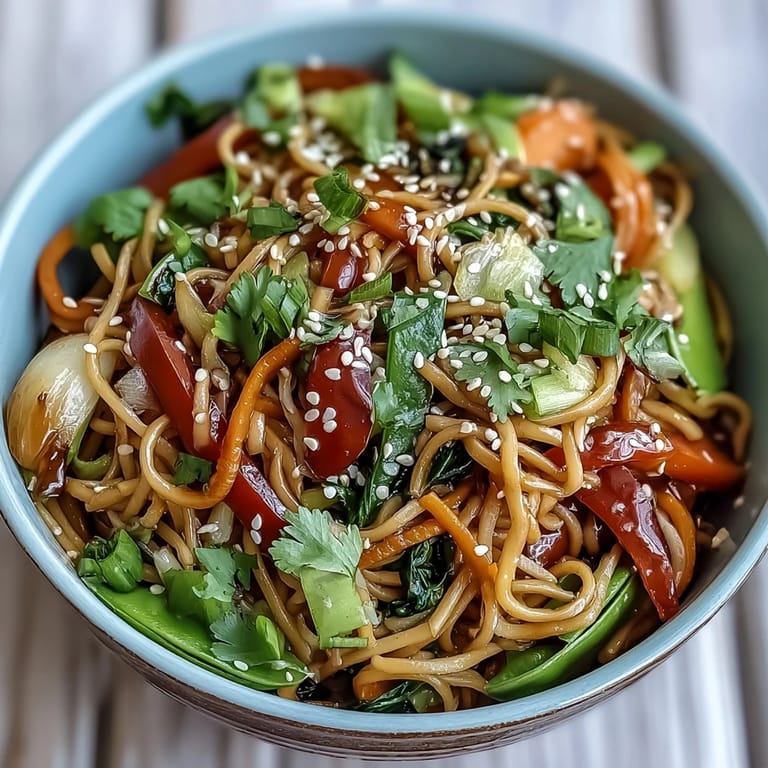
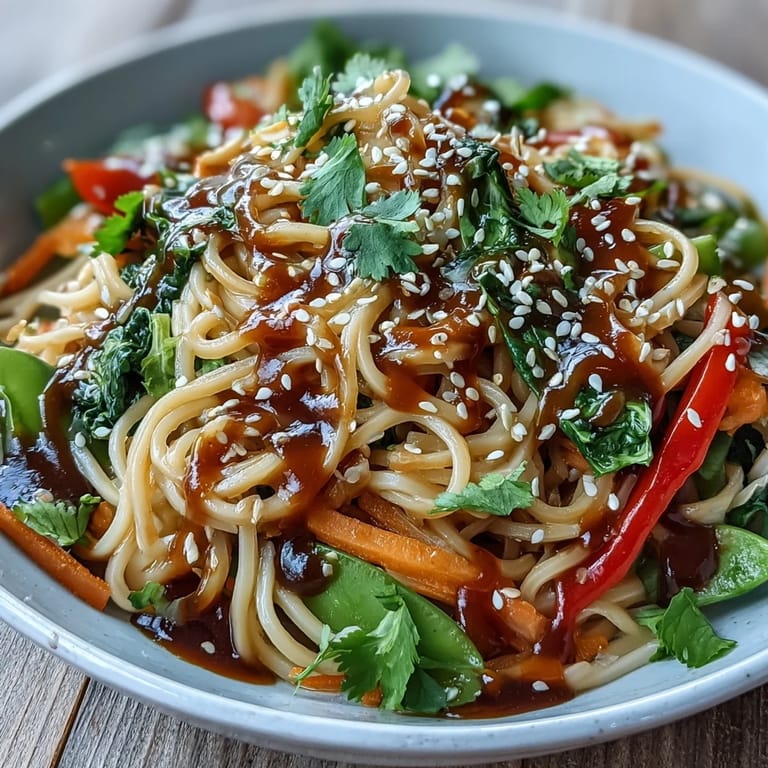
 One Tuesday evening, I was standing in my kitchen staring down a package of shirataki noodles I'd bought weeks ago with good intentions. My usual pasta night felt heavy, and I had this sudden craving for something bright and alive—so I decided to actually figure out what to do with them. Twenty minutes later, I was twirling these ghostlike strands with crisp vegetables and a ginger sauce that made my whole apartment smell like a tiny Asian market, and honestly, I haven't looked back since.
I made this for my friend who'd just started eating low-carb, and she was skeptical about the shirataki until she took that first bite with the ginger sauce. She literally closed her eyes and said, "Wait, this is actually *good*," which is the highest compliment anyone can give a healthy recipe.
Ingredients
- Shirataki noodles (400 g): These plant-based noodles are almost pure fiber and water, which sounds odd until you taste them—they're neutral and pick up flavor beautifully, and rinsing them properly removes any fishy smell they sometimes have.
- Bok choy (1 cup): The tender leaves wilt just enough while the stems stay crisp, giving you texture variety in every bite.
- Red bell pepper (1/2): It brings sweetness and crunch that balances the sharp ginger sauce perfectly.
- Snow peas (1/2 cup): These stay snappy if you don't overcook them, which is exactly what we're aiming for here.
- Carrot (1 medium): Sliced thin means it actually softens in the 2-3 minutes of cooking instead of staying stubbornly raw.
- Green onions (2): Save half of these for garnish—the raw ones add a fresh bite at the end.
- Tamari or gluten-free soy sauce (2 tbsp): This is your umami backbone, so don't skip quality here.
- Rice vinegar (1 tbsp): It cuts through the richness and keeps everything tasting bright.
- Toasted sesame oil (1 tbsp): Use the toasted kind, not the refined version—the flavor difference is night and day.
- Fresh ginger (1 tbsp): Finely grated so it distributes evenly and doesn't leave you with ginger chunks.
- Garlic (1 clove): One is enough; garlic doubles in intensity once it hits the warm sauce.
- Maple syrup (1 tsp, optional): It smooths out the sauce without making it sweet, just trust me on this one.
- Chili flakes (1/2 tsp, optional): If you want heat, this is where it lives.
- Toasted sesame seeds (1 tbsp): The toasting is crucial—it wakes up the nutty flavor that makes the whole bowl feel finished.
- Fresh cilantro or basil: Either one works; cilantro is more traditional but basil adds a different kind of brightness.
Tired of Takeout? 🥡
Get 10 meals you can make faster than delivery arrives. Seriously.
One email. No spam. Unsubscribe anytime.
Instructions
- Wake up the shirataki:
- Drain your noodles from their package liquid, rinse them under cold water until the water runs clear (this removes the slightly funky smell they can have), and boil them for exactly 2 minutes. This firms them up just enough so they don't turn into mush when you toss everything together.
- Build the sauce:
- In a small bowl, whisk tamari, rice vinegar, sesame oil, ginger, garlic, maple syrup, and chili flakes until everything is friends. The ginger and garlic should be evenly distributed so no one bite is too intense.
- Get the wok hot:
- Heat your skillet or wok over medium-high heat until you can feel the heat radiating before you even touch it. Add your harder vegetables first—carrot, bell pepper, and snow peas—and let them sit for a moment before stirring so they actually caramelize slightly instead of just steaming.
- Layer in the tender stuff:
- After 2-3 minutes, add bok choy and green onions and keep moving everything around for another 1-2 minutes. You want the bok choy wilted but the green onions still have a bit of snap to them.
- Bring it all together:
- Add your drained noodles to the pan, pour that ginger sauce over everything, and toss like you mean it for 2-3 minutes. Every strand should get a coating, and the heat should wake up the sauce so the whole bowl smells incredible.
- Plate and finish:
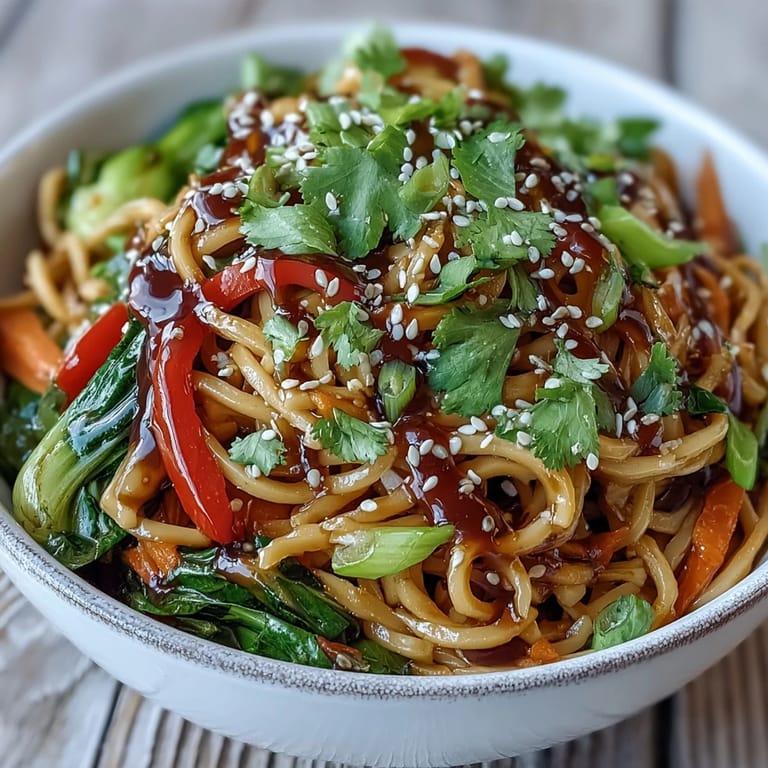
- Divide between bowls and top with toasted sesame seeds and fresh herbs while everything's still warm. The heat softens the cilantro or basil just slightly while keeping it fresh.
 Pin this
 There's something about handing someone a bowl of this—watching them realize that eating well doesn't have to be boring or complicated—that made me stop seeing cooking as a chore and start seeing it as actually mattering. This recipe sits at that intersection where healthy and delicious stop being opposing forces.
The Shirataki Difference
The first time I tried shirataki noodles outside of a recipe like this, they were kind of rubbery and sad. Then I realized they're not trying to be regular pasta—they're their own thing. They're a vehicle for sauce and vegetables, and once I stopped comparing them to what I was used to, something clicked. They soak up flavor, they're ready in minutes, and they don't leave you feeling stuffed, which is honestly the point of a weeknight dinner when you're already tired.
Customizing Your Bowl
This recipe is flexible enough that you can make it three times in a week and no two bowls have to be identical. I've added mushrooms on nights I needed something earthier, thrown in broccoli when I wanted more substance, and swapped snap peas in because I had them and they needed using. The ginger sauce is what ties everything together, so as long as you keep that consistent, your vegetables can rotate based on what's in your produce drawer or what's on sale.
Making It a Meal
As written, this is light and vegetable-forward, but that doesn't mean you can't anchor it with protein if you want something more substantial. I've poured this over grilled tofu that got slightly charred on the edges, I've added shrimp that cooked right in the pan, and I've crumbled tempeh on top. Even if you keep it vegan, a handful of cashews or almonds scattered on top adds richness without making you feel like you're eating salad. The beauty of a bowl is that it's endlessly customizable once you understand the base. The sauce stays bright, the vegetables stay crisp, and you get to decide how heavy or light you want to go. If you're meal-prepping, keep the sauce separate until you're ready to eat—the noodles and vegetables will keep for three days, but mixing them ahead turns everything soft and sad.
- Grilled tofu or tempeh adds plant-based protein without overpowering the delicate ginger sauce.
- A squeeze of lime at the end brightens everything and makes it feel more complete than you'd expect from a simple citrus addition.
- Leftover cooked vegetables from dinner can totally find a second life in this bowl the next day.
 Pin this
 This bowl became my go-to on nights when I wanted to feel like I was taking care of myself without making it a whole production. It's the kind of recipe that quietly proves that eating well can actually be easy and delicious at the same time.
Recipe FAQs
- → Do shirataki noodles need cooking?
Shirataki noodles require minimal preparation—simply drain, rinse thoroughly under cold water, and boil for 2 minutes to remove their natural aroma. Pat them dry before adding to your skillet.
- → Can I add protein to this bowl?
Absolutely. Grilled tofu, tempeh, edamame, or cooked shrimp make excellent additions. Prepare your protein separately and arrange it on top before serving.
- → What vegetables work best in stir-fry?
Bok choy, bell peppers, snow peas, carrots, and broccoli are ideal choices. Quick-cooking vegetables that stay crisp-tender work beautifully with the delicate shirataki texture.
- → How do I store leftovers?
Store components separately in airtight containers. The vegetables will maintain their crunch best when kept apart from the noodles. Reheat gently in a skillet before serving.
- → Is this dish gluten-free?
Yes, when using tamari instead of regular soy sauce. Always check labels on your shirataki noodles and sauces to confirm gluten-free certification.