 Pin this
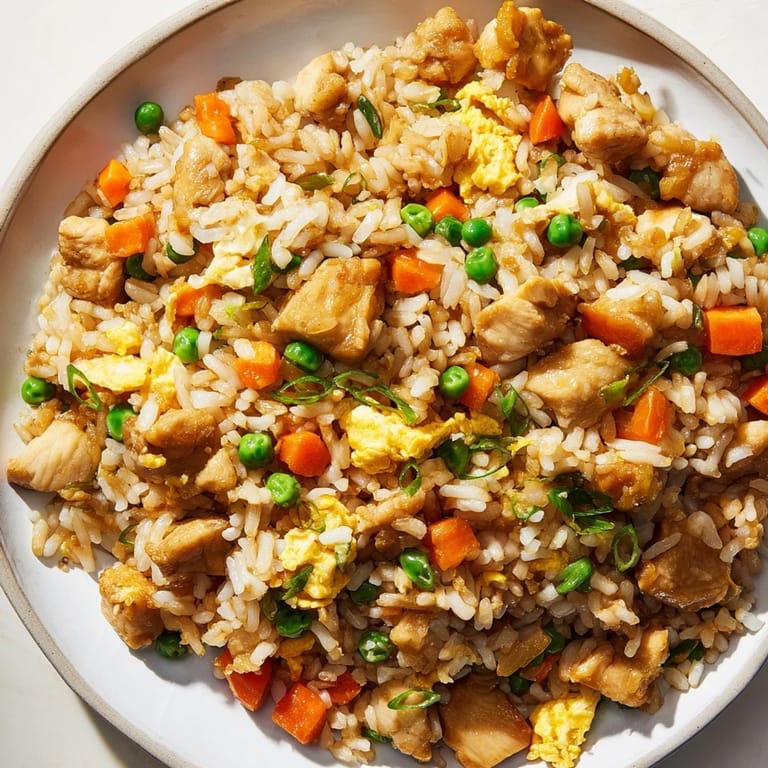
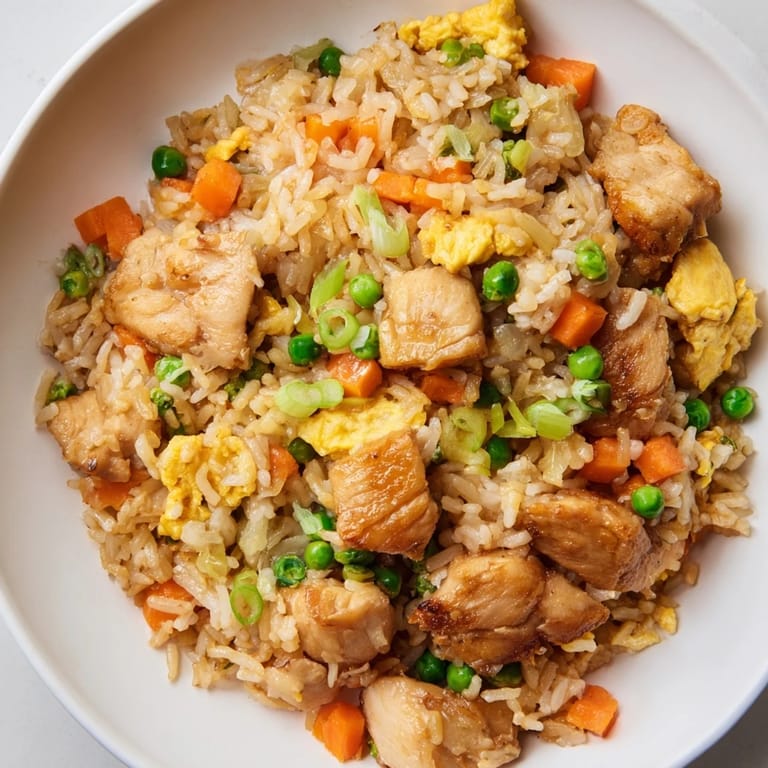
 There's something almost meditative about the sound of a wok hitting high heat, that sharp sizzle that tells you the pan is ready. I discovered this chicken fried rice on a Tuesday night when I had leftover rice, some chicken, and exactly the kind of craving that only stir-fried rice can satisfy. What started as making do with what was in my fridge became my go-to meal when I needed something warm, filling, and done in less time than it takes to order takeout.
I made this for my roommate once when she came home exhausted from work, and watching her face light up at the smell of sesame oil and soy sauce made me realize this dish has a quiet kind of magic. It's humble enough to feel comforting but impressive enough that she asked for the recipe the next day.
Ingredients
- Chicken breast or thigh, 300 g diced: Thighs stay more tender if you slightly overcook them, but breasts work fine if you slice them thin and don't walk away while they cook.
- Eggs, 2 large: They scramble best when the wok is hot enough to set them immediately, creating fluffy curds rather than a rubbery sheet.
- Carrot, 1 medium diced: Dicing small means they cook through in minutes, adding sweetness without crunch that might throw off the texture.
- Frozen peas, 100 g: No need to thaw them—they warm through in the pan and stay bright colored.
- Onion, 1 small finely chopped: Finely chopped matters because it distributes throughout the rice instead of leaving big pieces.
- Spring onions, 2 sliced plus extra for garnish: Save a handful raw for garnish so you get that onion sharpness in every bite.
- Cooked jasmine or long-grain rice, 500 g preferably day-old: Day-old rice is crucial—fresh rice clumps and steams instead of frying into separate grains.
- Soy sauce, 3 tbsp: This is your backbone flavor, so taste as you go because different brands have different saltiness.
- Oyster sauce, 1 tbsp optional: It adds umami depth that makes the whole thing taste restaurant-quality, but the dish works perfectly without it.
- Sesame oil, 1 tsp: Drizzle this at the end for aroma and flavor, never cook with it or it turns bitter.
- Ground white pepper, 1/2 tsp: White pepper gives you heat without black specks, but regular pepper works if that's what you have.
- Salt to taste: You'll likely need less salt than you think since soy sauce brings plenty.
- Vegetable oil, 2 tbsp divided: High heat cooking demands oil with a high smoke point—vegetable, canola, or peanut all work.
Tired of Takeout? 🥡
Get 10 meals you can make faster than delivery arrives. Seriously.
One email. No spam. Unsubscribe anytime.
Instructions
- Get everything ready first:
- Chop everything and arrange it in bowls or on a cutting board before you touch the stove. Stir-frying happens fast, and there's no time to dice while things burn.
- Cook the chicken until golden:
- Heat 1 tbsp oil in your wok over medium-high heat, add the diced chicken, and let it sit for a minute before stirring so it gets golden edges. It takes about 4 to 5 minutes total—when there's no pink inside and the edges are slightly crispy, it's done.
- Soften the vegetables:
- Add the remaining oil, then onion and carrot, stirring occasionally until they start to soften around the edges, about 2 to 3 minutes. Toss in the peas for one more minute and they'll be warm and bright.
- Make the eggs:
- Push everything to the side of the wok, crack the eggs right in, and let them sit for just a moment before you scramble them through. You want soft curds, not a brown omelette.
- Add the rice and break up clumps:
- Dump in all the rice and start stirring, using the spatula to break apart any sticky chunks. This takes a minute or two and suddenly you'll see individual grains instead of a block.
- Bring everything together:
- Return the chicken, pour in the soy sauce, oyster sauce if you're using it, sesame oil, white pepper, and a pinch of salt. Stir everything for 2 to 3 minutes so the flavors coat every grain and the chicken warms through.
- Finish and taste:
- Toss in the sliced spring onions, give it one more stir, then take a bite and decide if you need more soy sauce or salt. You're the judge here.
 Pin this
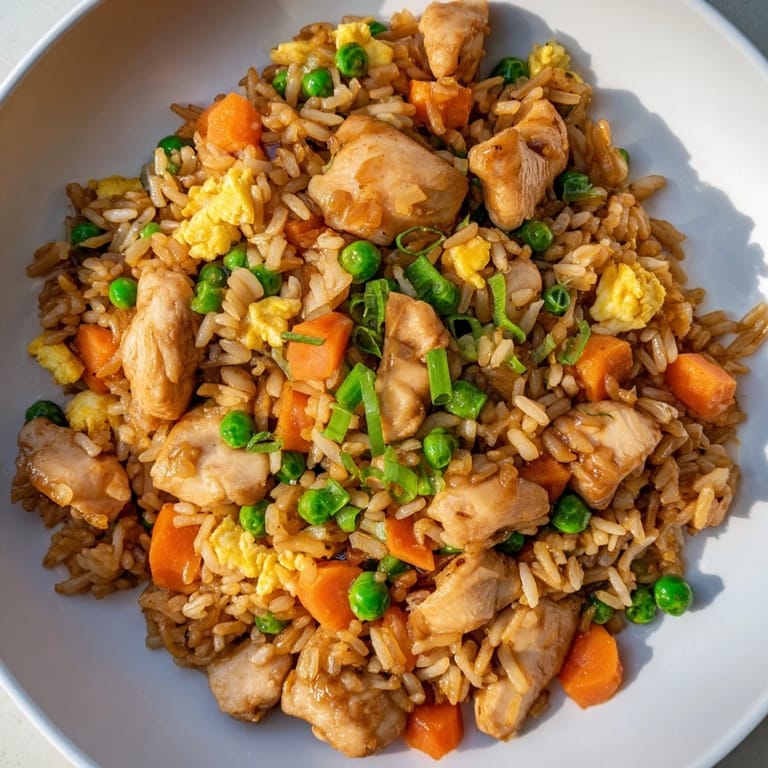
 There's a moment, right when everything comes together in that wok, where the aroma shifts from individual ingredients to something complete and whole. That's when you know you've nailed it.
Why This Works Every Time
The genius of fried rice is that it teaches you to respect heat and timing. When your pan is hot enough and your rice is cold enough, they meet in the middle and create something crispy and individual instead of gummy. The vegetables soften just enough to release their sweetness without turning mushy, and the chicken stays tender because you're not cooking it twice—just warming it back through.
Make It Your Own
Once you understand the basic technique, fried rice becomes a canvas for whatever you have on hand or whatever you're craving that day. I've made it with shrimp and it tastes like a special meal, I've made it with tofu for friends who don't eat meat and it's just as satisfying. Bell peppers, corn, bean sprouts, cashews, peanuts—they all belong here.
The Little Details That Matter
The difference between okay fried rice and really good fried rice lives in the small choices. Using sesame oil at the end instead of cooking with it means it smells incredible without turning acrid. Slicing spring onions and adding half at the end gives you both cooked flavor threaded through and raw sharpness in each bite. Tasting as you adjust seasoning means you never end up with something too salty or bland.
- If your rice is fresh and you're in a hurry, spread it on a tray while you cook the other components so it dries out a bit.
- Keep a tiny splash of water or broth on hand in case your rice sticks stubbornly to the bottom of the pan.
- Spring onions and sesame oil are small investments that transform this from weeknight filler to something you actually look forward to eating.
 Pin this
 This is the kind of recipe that gets better the more you make it, because you start trusting your instincts instead of watching the clock. It becomes the meal you turn to when you need something fast, something satisfying, and something that tastes like you actually know what you're doing in the kitchen.
Recipe FAQs
- → Can I use different proteins instead of chicken?
Yes, shrimp, pork, or tofu can be substituted to vary the flavors and textures while maintaining the dish’s balance.
- → Why is day-old rice recommended?
Day-old rice is drier, which helps prevent clumping and results in a better stir-fry texture with crisp grains.
- → How do I achieve fluffy scrambled eggs in the stir-fry?
Cook scrambled eggs over medium heat until just set, avoiding overcooking to keep them tender and moist.
- → Can I add other vegetables to the stir-fry?
Yes, bell peppers, corn, or bean sprouts are great additions to enhance flavor and nutrition.
- → What oils work best for stir-frying in this dish?
Vegetable oil is suitable for high-heat cooking; sesame oil is added for flavor but should be used sparingly.