 Pin this
 There's something almost meditative about making an omelet on a quiet morning. The butter hits the pan with that gentle sizzle, and within minutes you've got something warm and satisfying that tastes far more impressive than it actually is. I learned to make omelets properly during a brief stint working breakfast shifts at a little café, where the chef would watch us flip and fold with an exacting eye. Now it's become my go-to move when I want to feel like I've actually cooked something, even on the most rushed mornings.
My partner was skeptical the first time I insisted I could make a proper omelet at home without the whole production of going out for brunch. I remember standing at the stove, spatula in hand, absolutely focused while they read the newspaper, waiting to be either impressed or disappointed. When I slid that golden, perfectly folded omelet onto their plate, the skepticism just melted away—along with a bite of melted cheese. It became our weekend tradition after that, simple as it sounds.
Ingredients
- Eggs: Four large eggs are the foundation, and fresher really does taste noticeably better if you can swing it.
- Milk or cream: Two tablespoons might seem small, but it adds lift and tenderness that you'll immediately notice compared to a water-thin omelet.
- Butter: One tablespoon, unsalted, so you control the salt level and taste pure, sweet butter flavor.
- Cheese: Eighty grams of something that melts beautifully—Gruyère if you're being fancy, sharp Cheddar if that's what's in your kitchen.
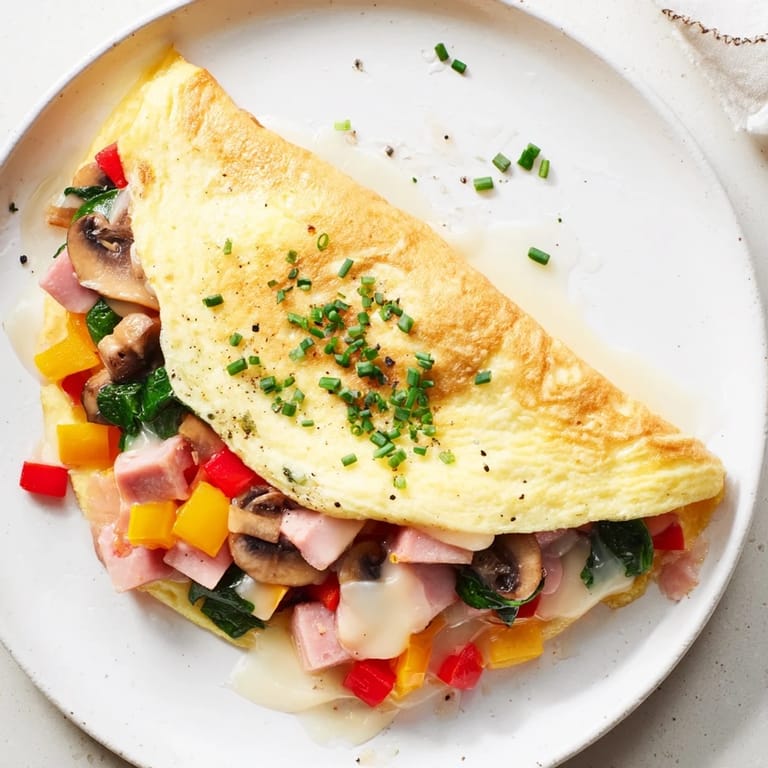
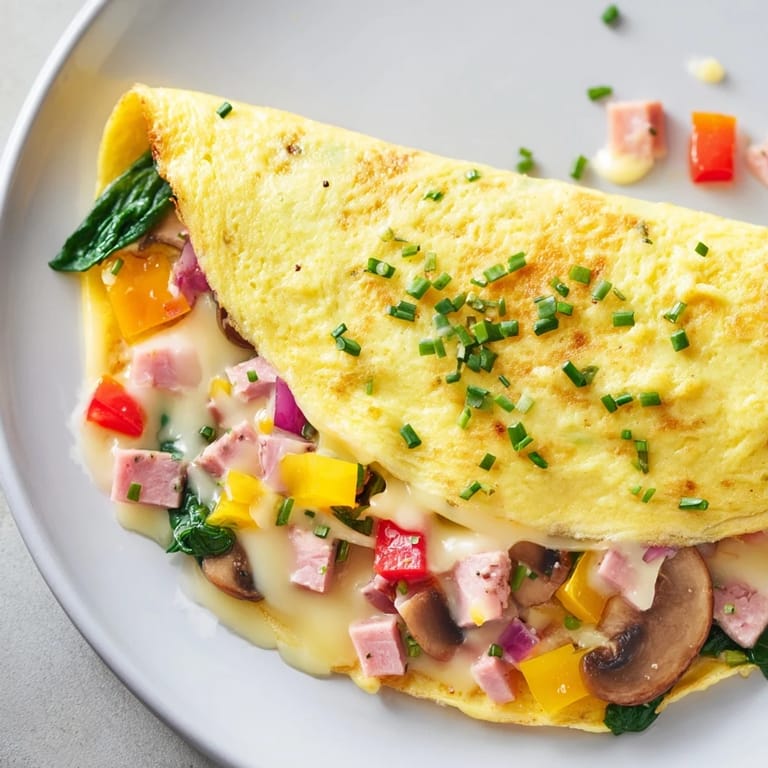
- Optional fillings: Ham, bell pepper, spinach, or mushrooms all work brilliantly, but the magic is that you choose what goes in.
- Salt and black pepper: Don't skip seasoning the egg mixture itself; it makes the whole thing taste intentional.
Tired of Takeout? 🥡
Get 10 meals you can make faster than delivery arrives. Seriously.
One email. No spam. Unsubscribe anytime.
Instructions
- Whisk the eggs together:
- Crack all four eggs into a bowl, pour in the milk, add a pinch of salt and pepper, then whisk everything until it's light and slightly frothy. This takes maybe a minute and makes a real difference in the final texture.
- Get the butter ready:
- Put a nonstick skillet over medium heat and let the butter melt, bubble gently, and coat the whole bottom. You're looking for that moment where it's foaming but nowhere near brown.
- Pour and wait:
- Pour your egg mixture into the hot pan and let it sit completely undisturbed for about a minute. Tilt the pan slightly to spread everything evenly, then don't touch it—that's how the bottom sets into something almost creamy.
- Add the cheese and fillings:
- Sprinkle your grated cheese all over the eggs, then scatter on whatever else you're using. At this point the edges should just barely be pulling away from the pan.
- Lift and let it flow:
- Using a spatula, gently lift one edge of the omelet so the uncooked egg on top can run underneath and hit the hot pan. Do this every 20 seconds or so for about a minute, being patient and gentle.
- Fold and finish:
- When the top still looks just slightly wet and creamy but the bulk is set, fold the omelet in half and let it cook for another 30 seconds. Slide it onto a plate and serve immediately while everything's still warm and soft.
 Pin this
 I made an omelet for a friend who'd just moved to the neighborhood, and something shifted in how I thought about cooking. It wasn't complicated or time-consuming enough to feel like hospitality in the traditional sense, yet it felt genuinely generous. There's an intimacy to quickly making someone something warm and folded with their preferences in mind. That simple breakfast became the start of an actual friendship.
Cheese Matters More Than You Think
Don't just throw in whatever cheese is on sale. A good melting cheese—something like Gruyère with its nutty sweetness or a sharp white Cheddar—changes the whole experience. I've made omelets with grocery store cheddar and omelets with proper cheese from a good counter, and the difference is absolutely worth the few extra dollars. The cheese should almost taste like it's the star, with eggs as the supporting actor holding it all together.
Getting the Fold Right
There's a moment where you stop second-guessing yourself and just fold the thing. If it breaks, it's still delicious; if it's not perfectly set, it's still eggs and cheese on your plate. The fold is less about precision and more about committing to the motion and getting it onto a plate while it's still warm. Honestly, even a slightly imperfect omelet tastes better than scrambled eggs because you're in control of the texture.
What to Serve Alongside
An omelet can be a complete breakfast on its own, but a few simple additions make it feel like a proper meal. Thick crusty toast for soaking up any rich melted cheese edges, or a sharp green salad for balance if you want something lighter. I've even served omelets as a casual lunch with a simple tomato salad and crusty bread, and it felt sophisticated without any actual effort.
- Toast bread while the omelet cooks so everything's hot at the same time.
- A pinch of fresh herbs like chives or parsley scattered on top costs nothing and elevates the whole thing visually.
- Grind fresh black pepper right over the finished omelet just before eating.
 Pin this
 An omelet is proof that you don't need complicated ingredients or a long list of steps to make something that feels genuinely nourishing. Make one for yourself on a morning when you want to slow down, or make one for someone else when you want to say hello in the language of warm food.
Recipe FAQs
- → How do I make the omelet extra fluffy?
Beat the eggs vigorously before cooking and add a splash of milk or cream. Cooking gently over medium heat helps retain fluffiness.
- → What cheeses work best for this omelet?
Gruyère, Cheddar, and Emmental melt well and add rich flavor, but feel free to try your favorite melting cheese.
- → Can I add vegetables or meat to this dish?
Yes, diced bell peppers, spinach, mushrooms, or cooked ham can be added for extra taste and texture.
- → What tools are essential for preparation?
A nonstick skillet, whisk or fork, mixing bowl, and spatula will ensure easy cooking and folding of eggs.
- → How do I avoid overcooking the eggs?
Cook the eggs gently without stirring, fold when edges are set but the center is still creamy to maintain softness.