 Pin this
 My neighbor knocked on the door one rainy Tuesday holding a crumpled takeout menu and said she couldn't decide what to order. We ended up making this instead, using whatever she had in her fridge and a half-empty bottle of soy sauce I found in my pantry. The smell of garlic and ginger filled both our kitchens through the open window. We ate straight from the skillet, laughing about how much better this tasted than anything we could have called in. Sometimes the best meals happen when you stop waiting for perfect.
I made this for my brother when he came home from college with four friends and no warning. They devoured two skillets worth in under ten minutes, scraping the pan with their forks and asking if there was more. One of them texted me two weeks later asking for the recipe because he'd been thinking about it ever since. That's when I knew this wasn't just another weeknight dinner.
Ingredients
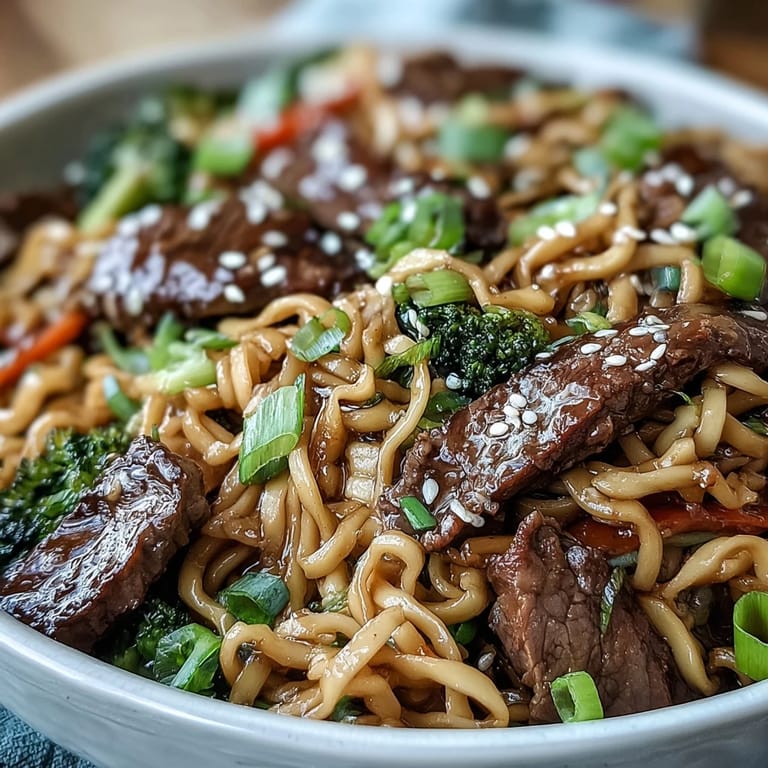
- Rice noodles: These soak up the sauce beautifully and stay silky without getting gummy, just make sure to rinse them under cold water after draining to stop the cooking.
- Flank steak: Slicing it thin against the grain keeps every piece tender and quick to cook, and freezing the steak for 15 minutes beforehand makes slicing a breeze.
- Broccoli florets: They add a satisfying crunch and soak up the garlicky flavors while still holding their shape in the skillet.
- Bell pepper: Red or yellow peppers bring a slight sweetness that balances the salty soy sauce, plus they look gorgeous against the green broccoli.
- Carrot: Julienned carrots cook quickly and add a pop of color and earthy sweetness that rounds out the vegetable mix.
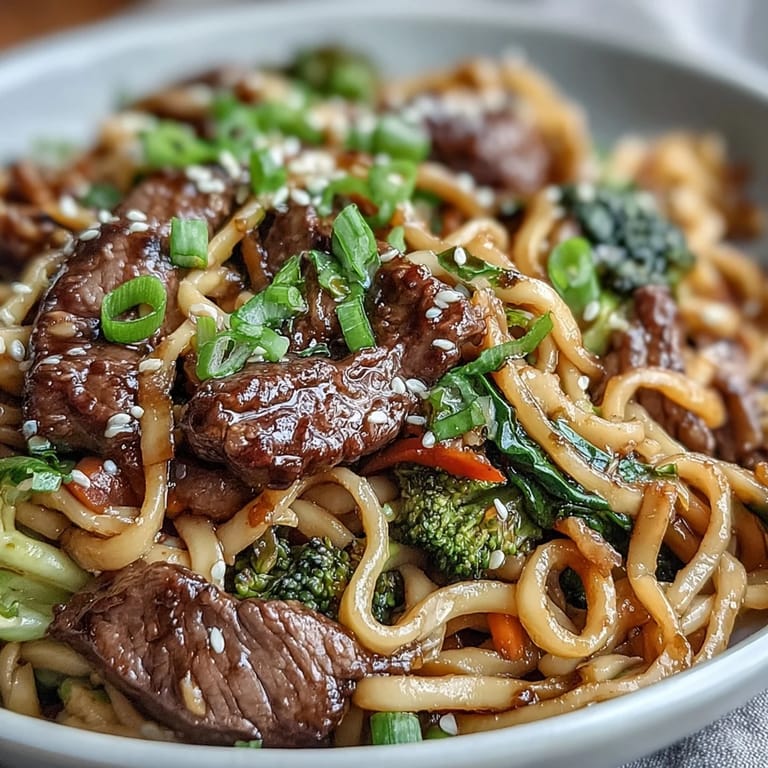
- Green onions: Chopped fresh at the end, they give a sharp, bright finish that wakes up every other flavor on the plate.
- Garlic: Minced garlic blooms in hot oil and perfumes the entire dish with that unmistakable savory aroma.
- Ginger: Freshly grated ginger adds a warm, slightly spicy brightness that makes the sauce feel alive and complex.
- Soy sauce: The salty backbone of the sauce, it coats everything with deep umami and ties all the ingredients together.
- Brown sugar: Just enough sweetness to balance the soy and create a glossy, caramelized finish on the beef and noodles.
- Sesame oil: A small amount goes a long way, adding nutty richness and that signature Asian flavor you can't fake.
- Vegetable oil: High smoke point oil lets you get the skillet screaming hot without burning, which is key for a good sear on the beef.
- Sesame seeds: Toasted seeds sprinkled on top add a delicate crunch and visual polish that makes the bowl feel restaurant special.
Tired of Takeout? 🥡
Get 10 meals you can make faster than delivery arrives. Seriously.
One email. No spam. Unsubscribe anytime.
Instructions
- Prepare the noodles:
- Cook the rice noodles according to the package directions, then drain and rinse them under cold water to stop them from sticking together. Set them aside while you get the skillet going.
- Sear the beef:
- Heat vegetable oil in a large skillet or wok over medium-high heat until it shimmers, then add the thinly sliced flank steak in a single layer and let it sear for 2 to 3 minutes without moving it so it gets a nice brown crust. Remove the beef and set it aside on a plate.
- Bloom the aromatics:
- In the same hot skillet, toss in the minced garlic and grated ginger, stirring constantly for about 30 seconds until the smell hits you and fills the kitchen. Don't let them burn or they'll turn bitter.
- Stir-fry the vegetables:
- Add the broccoli, bell pepper, and julienned carrot to the skillet, tossing them around for about 5 minutes until they're tender but still have a bit of snap. Keep the heat high and keep everything moving so nothing sticks.
- Mix the sauce:
- While the vegetables cook, whisk together the soy sauce, brown sugar, and sesame oil in a small bowl until the sugar dissolves completely. This takes just a minute and makes sure the sauce coats evenly.
- Combine and glaze:
- Return the seared beef to the skillet and pour the sauce over everything, stirring to coat the beef and vegetables in that glossy, fragrant mixture. Let it bubble for a moment so the flavors meld.
- Toss with noodles:
- Add the cooked rice noodles to the skillet and gently toss everything together using tongs or a spatula, making sure every noodle gets coated in the sauce and warmed through, about 2 minutes. Be gentle so the noodles don't break apart.
- Garnish and serve:
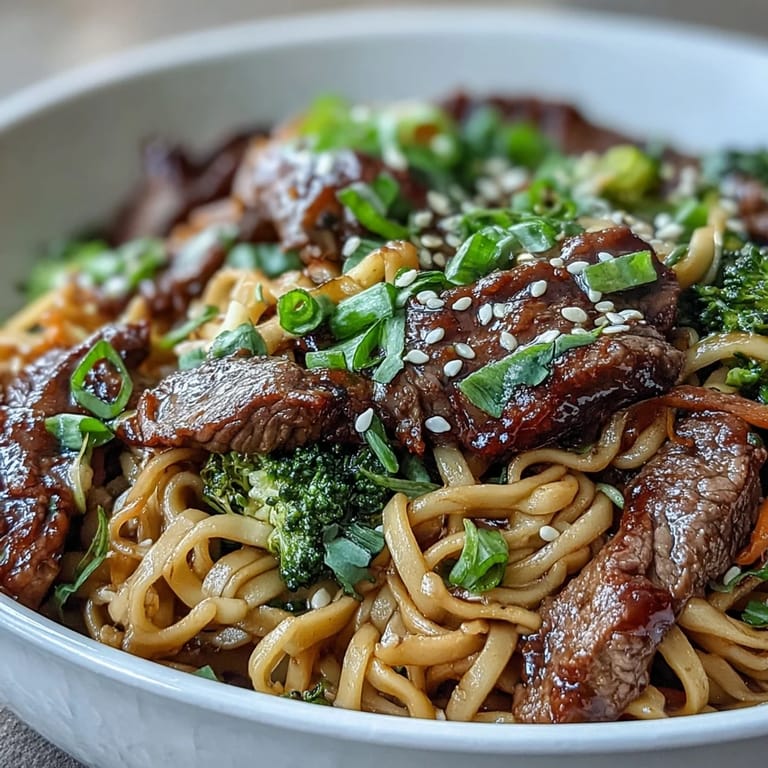
- Divide the noodles into bowls and top each one with chopped green onions and a sprinkle of sesame seeds. Serve immediately while everything is hot and glossy.
 Pin this
 One evening I packed this into containers and brought it to a friend who'd just had a baby. She texted me later that night saying it was the first thing she'd eaten in two days that didn't taste like cardboard, and that she cried a little because it was warm and good and someone had thought of her. Food does that sometimes, it says things we don't have words for.
Customizing Your Bowl
I've swapped in snap peas, zucchini, and even thinly sliced cabbage depending on what's in the crisper drawer, and every version has been delicious. If you want heat, stir a spoonful of gochujang or sriracha into the sauce before pouring it over the beef. For a different protein, chicken thighs or firm tofu work beautifully and cook in about the same amount of time.
Storing and Reheating
Leftovers keep in an airtight container in the fridge for up to three days, though the noodles will soak up more sauce as they sit. When reheating, add a splash of water or extra soy sauce to the skillet and warm everything over medium heat, stirring gently until heated through. I've even eaten this cold straight from the fridge on a busy morning, and it was oddly satisfying.
Final Touches
The difference between good and great often comes down to tiny details like toasting your sesame seeds in a dry pan for a minute before sprinkling them on top, or slicing your green onions on a sharp diagonal so they look elegant. A squeeze of lime juice right before serving brightens everything up and cuts through the richness in a way that feels refreshing.
- Use a wok if you have one, the high sides make tossing everything together so much easier without flinging noodles everywhere.
- Taste the sauce before adding it to the skillet and adjust the sweetness or saltiness to your preference.
- Let the skillet get properly hot before adding the beef, that sizzle is what creates flavor.
 Pin this
 This bowl has saved more weeknights than I can count, turning tired evenings into something that feels like care. I hope it does the same for you.
Recipe FAQs
- → Can I use other proteins instead of flank steak?
Yes, chicken breast or firm tofu work beautifully as alternatives. Slice chicken thinly against the grain for quick, even cooking, or press and cube tofu for crispy edges.
- → How do I prevent rice noodles from sticking together?
Rinse cooked noodles under cold water after draining to remove excess starch. Toss with a small amount of sesame oil before adding to the skillet.
- → What vegetables can I add for more variety?
Snap peas, zucchini, baby corn, or shiitake mushrooms complement the dish well. Add vegetables that cook at similar rates so everything stays tender-crisp.
- → Can I make this dish spicy?
Absolutely. Stir sriracha into the sauce for heat, or use gochujang (Korean chili paste) for authentic depth of flavor. Start with one teaspoon and adjust to taste.
- → How long do leftovers keep in the refrigerator?
Store in an airtight container for up to 3 days. Reheat gently in a skillet with a splash of water to refresh the noodles without making them mushy.