 Pin this
 There's a particular magic to spring entertaining that doesn't require fussing over a hot stove for hours. My neighbor brought over a punnet of farmer's market strawberries one April afternoon, still warm from the sun, and I found myself suddenly inspired to create something that would impress at a dinner party without keeping me stuck in the kitchen. That's when this salad came together—a dish that somehow feels both elegant and effortless, the kind of thing that makes guests lean back in their chairs and ask for the recipe before they've even finished their plate.
I served this to six friends on a Thursday evening when I'd promised dinner but had zero energy for complexity, and I watched them all slow down mid-conversation to really taste what was in front of them. Someone mentioned the crunch of the pecans mixed with the creaminess of the goat cheese, and another person kept stealing extra bites of the strawberries—it was one of those moments where you realize a simple salad can be just as memorable as something that took three hours and a sous-vide machine.
Ingredients
- Fresh arugula, washed and dried: The peppery bite is what makes this salad sing; baby arugula is milder if you prefer something less assertive.
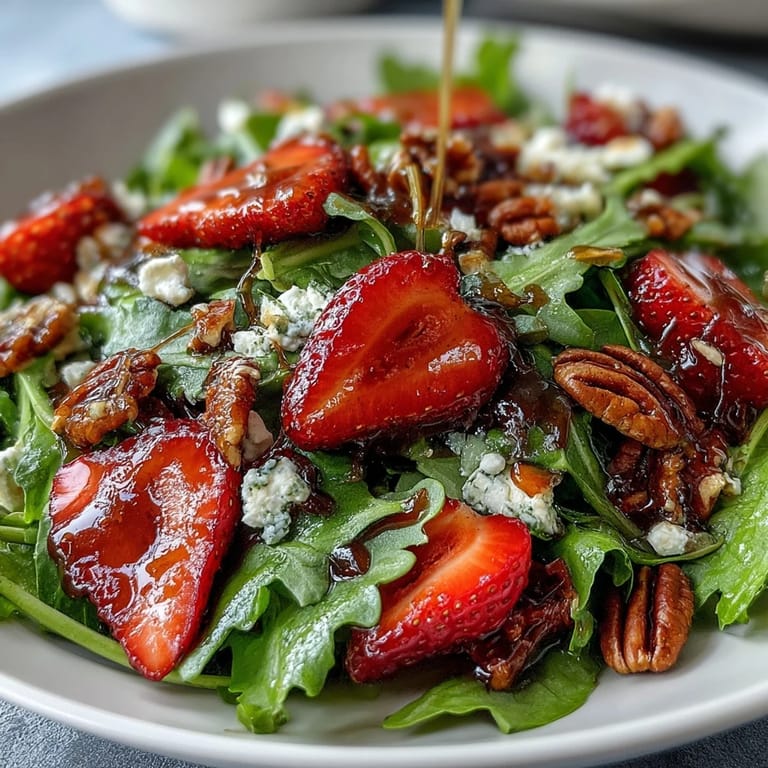
- Ripe strawberries, hulled and sliced: Choose berries that smell like strawberries (seriously, this matters more than size), and slice them right before serving so they don't weep.
- Red onion, thinly sliced: A little goes a long way here; the thinness is key so it softens slightly when it hits the dressing.
- Crumbled goat cheese: The tanginess cuts through the sweetness beautifully, but feta works just as well if that's what you have.
- Toasted pecans or walnuts, roughly chopped: Toasting them yourself makes an enormous difference in flavor and texture—store-bought roasted is fine, but raw pecans will taste flat.
- Balsamic vinegar: Don't use the cheap stuff for the glaze; a decent aged balsamic is worth every penny since reduction concentrates both flavor and any impurities.
- Honey or maple syrup: This sweetness balances the vinegar's tang and helps the glaze coat the back of a spoon properly.
- Extra-virgin olive oil: This dresses the salad itself, so choose one you actually enjoy tasting.
- Lemon juice, freshly squeezed: Bottled lemon juice tastes flat and metallic; fresh makes all the difference in brightness.
- Sea salt and freshly ground black pepper: Finishing pepper adds a sharp note right at the end.
Tired of Takeout? 🥡
Get 10 meals you can make faster than delivery arrives. Seriously.
One email. No spam. Unsubscribe anytime.
Instructions
- Reduce the balsamic into liquid gold:
- Pour your balsamic vinegar and honey into a small saucepan and bring it to a gentle simmer over medium heat, stirring occasionally so the honey dissolves evenly. After about 4 to 5 minutes, when it's thickened enough to coat the back of a spoon and smells intensely sweet and tangy, pull it off the heat and let it cool—it'll thicken a tiny bit more as it cools.
- Whisk your dressing:
- In a small bowl, combine olive oil, lemon juice, and sea salt with a simple whisk until the salt dissolves. Taste it and adjust; if it feels too sharp, add a touch more oil, and if it tastes flat, a squeeze more lemon fixes it.
- Combine the greens and brightness:
- Toss your washed and dried arugula with the sliced strawberries and thin red onion slices in a large bowl. The dryness of the arugula matters here—any excess water will dilute your dressing.
- Dress the salad gently:
- Drizzle the olive oil and lemon dressing over the mixture and toss with a light hand so the arugula doesn't bruise and the strawberries stay intact. This isn't the time to be aggressive.
- Layer in the creamy and crunchy elements:
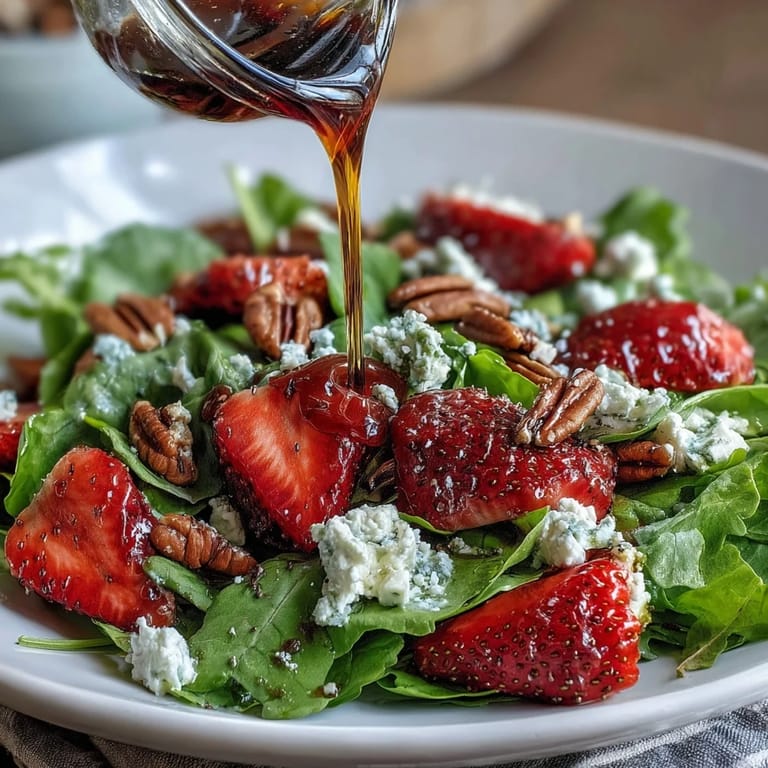
- Add the goat cheese crumbles and chopped pecans, then toss again very gently or simply arrange them on top if you're plating individually—either way looks beautiful and keeps everything from getting mushed.
- Finish with the glaze and pepper:
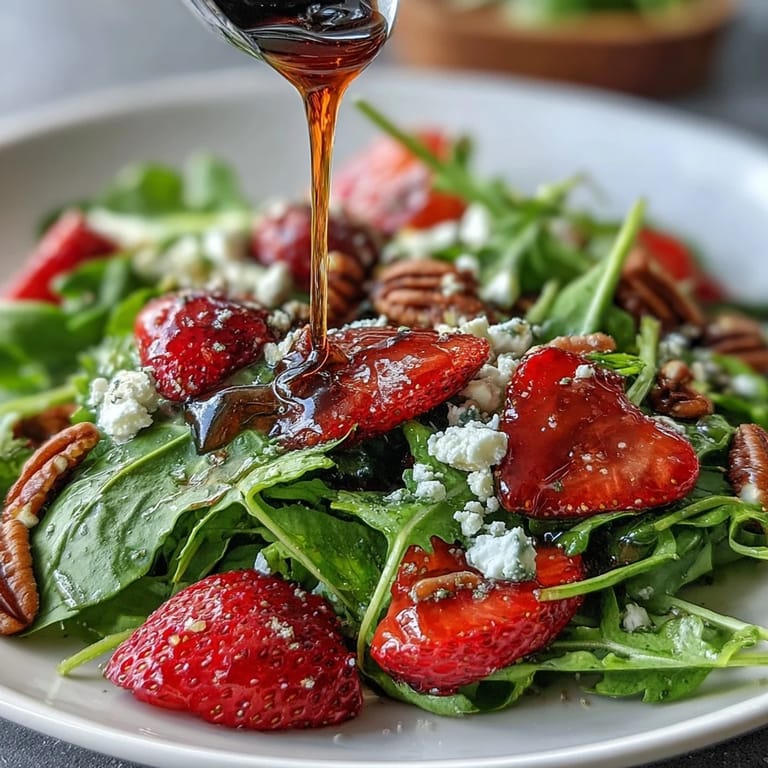
- Just before serving, drizzle the cooled balsamic glaze over the salad and finish with a generous grind of fresh black pepper. This timing is everything; the glaze on warm plates tastes better than on cold ones.
 Pin this
 I remember one guest asking if I'd taken a cooking class because the flavors felt so intentional, and I laughed because honestly, I was just trying to use up what was in my crisper and happened to have made something that tasted like I'd planned every component. That's the real secret of this salad—it doesn't need pretension, just good ingredients and the good sense not to overthink it.
When to Serve This Salad
Spring and early summer are the obvious windows when strawberries are at their best and arugula is still tender, but I've also made this in winter when I found exceptional berries at the farmer's market and needed something bright to cut through all the heavy food. It works as a first course that wakes up the palate, a side to grilled fish or chicken, or even as a light lunch with some crusty bread and extra cheese. The beauty is that it's refreshing enough to serve when you want something that won't leave everyone feeling heavy afterward.
The Art of Toasting Your Own Nuts
I used to buy pre-toasted pecans until I actually toasted some raw ones in a dry skillet and realized I'd been eating flavorless wafers my whole life. Raw nuts taste faintly bitter and pale; toasted ones smell incredible and taste almost buttery. It takes maybe five minutes in a skillet over medium heat, shaking the pan occasionally so they toast evenly without burning, and the difference in this salad is genuinely noticeable—the crunch becomes a real textural moment instead of just an afterthought.
Building Salads That Actually Taste Like Something
The mistake I see most often is treating salad components as separate ingredients instead of thinking about how they work together. Here, the peppery arugula needs the sweetness of strawberries to balance it, which is why you can't just substitute any green; the goat cheese needs the acid of the dressing to keep it from feeling heavy; and the balsamic glaze needs the salt of the cheese and the freshness of the fruit to prevent it from tasting cloying. This isn't accidental—it's why this particular combination became a favorite, and it's why rearranging pieces without understanding the balance usually falls flat. The moment you start thinking about salad as a conversation between flavors rather than a pile of ingredients, your versions start surprising people.
- Taste each component by itself before assembly so you know what you're working with.
- Always dress right before serving unless you're deliberately making a marinated salad.
- Acid, fat, and salt are the foundations; everything else is building on those three notes.
 Pin this
 This salad has a way of becoming the dish people remember when they think about spring at your table. Serve it with confidence, knowing that simplicity done well always impresses more than complexity done poorly.
Recipe FAQs
- → Can I use different nuts instead of pecans or walnuts?
Yes, pistachios or almonds work well and add a unique crunch and flavor to the salad.
- → How do I make the balsamic glaze?
Simmer balsamic vinegar with honey or maple syrup over medium heat until thickened and syrupy, then let it cool before drizzling.
- → Is this dish suitable for dairy-free diets?
To make it dairy-free, omit the goat cheese or substitute with a plant-based alternative or feta.
- → How can I add protein to this dish?
Grilled chicken or shrimp can be added for a heartier option without altering the salad's fresh flavors.
- → What wine pairs well with this salad?
A crisp Sauvignon Blanc or a sparkling rosé complements the salad’s bright and tangy notes beautifully.
- → Can I prepare this salad in advance?
Prepare the components separately and assemble just before serving to keep ingredients fresh and crisp.